
Laminate Underlayment Explained: Foam, Cork, Felt, and Why It Matters

Essential Functions of Laminate Underlayment
- Standard Foam: Budget friendly, lightweight, ideal for basic residential rooms over wood subfloors.
- Cork: Eco friendly, exceptional acoustic performance, high compression resistance, naturally mold resistant.
- Felt: Dense recycled fibers, superior sound dampening, excellent thermal control, premium feel underfoot.
- Why It Matters: Skipping or misjudging underlayment causes joint stress, hollow stepping sounds, moisture damage, and voided manufacturer warranties.
Why Laminate Underlayment Matters
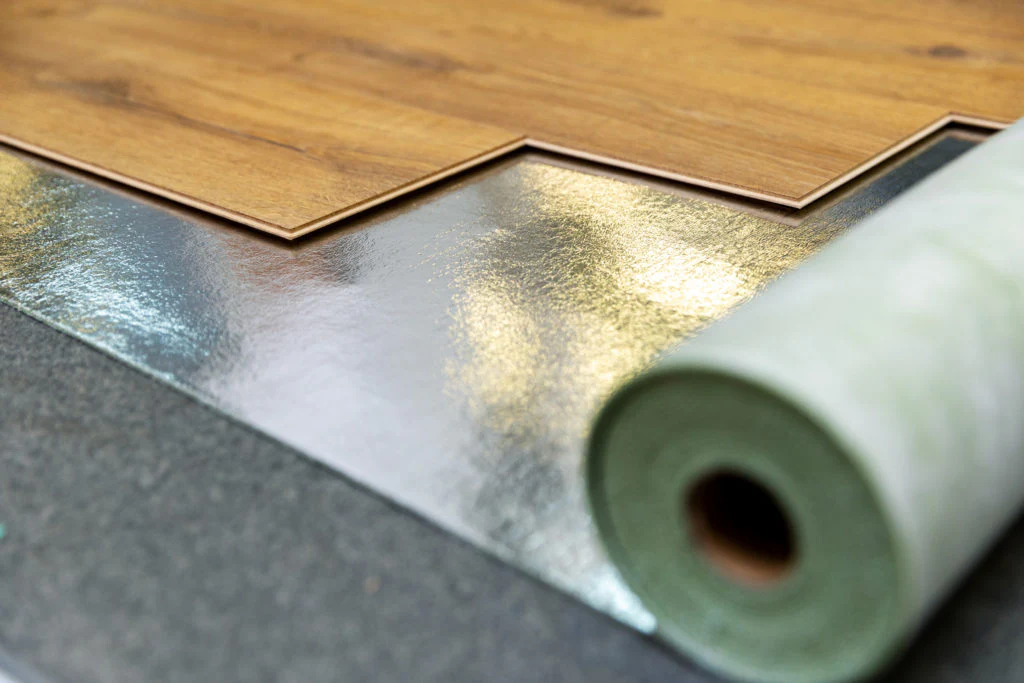
- Sound Absorption: Eliminates the click clack noise typical of floating floors.
- Moisture Defense: Protects wood core planks from subfloor vapor emissions.
- Thermal Comfort: Retains indoor heat during cold winter months.
- Minor Leveling: Absorbs slight subfloor imperfections to prevent seam movement.
Types of Laminate Underlayment Compared
- Best For: Upper level bedrooms or dry wood subfloors.
- Consideration: Requires an added 6-mil vapor barrier when installed over concrete subfloors.
- Best For: Multi story homes, condos, and eco conscious build projects.
- Consideration: Naturally resistant to mold and mildew growth.
- Best For: High traffic living areas and installations over radiant heating systems.
- Consideration: Excellent moisture management when paired with an integrated vapor barrier backing.
Underlayment Comparison Table
| Material | Sound Control | Moisture Protection | Cushioning | Best Application |
|---|---|---|---|---|
| Standard Foam | Moderate | Requires separate barrier on concrete | Light | Second-story rooms, basic wood subfloors |
| Cork | Excellent | Naturally resistant (barrier recommended) | Firm & Resilient | Multi-family units, eco-friendly spaces |
| Felt | Superior | Integrated vapor barrier available | Heavy-Duty | High-traffic main floors, living rooms |
Choosing the Right Option for Your Project
- Installing Over Concrete: Always choose an option featuring an integrated 6-mil moisture vapor barrier to prevent moisture absorption.
- Attached Underlayment Planks: Check if your laminate planks come with pre-attached padding. Adding a second layer of foam can cause excessive flex and damage plank lock joints.
- Acoustic Requirements: Review Impact Insulation Class (IIC) and Sound Transmission Class (STC) ratings if you live in a multi-family unit with strict HOA noise guidelines.
Expert Guidance with DeGraaf Interiors
Our certified installers at DeGraaf Interiors ensure your subfloor preparation and underlayment selection match your specific home layout. Explore our full range of laminate flooring options, discover our professional installation services, or schedule a personalized design consultation at our West Michigan showrooms today.
Frequently Asked Questions
Can I double up underlayment to fix an uneven floor? No. Adding extra underlayment creates too much cushion beneath floating planks, causing locking mechanisms to bend or break under foot traffic. Level uneven subfloors using self leveling compounds instead.
Do I need underlayment if my laminate has pre-attached pad? If your laminate flooring features pre-attached underlayment, do not add an additional foam or felt layer. You only need to lay down a 6-mil moisture barrier if installing over concrete.
Is cork underlayment better than foam for sound reduction? Yes. Cork is significantly denser than standard foam, providing superior sound dampening and structural support over long periods.
Written by Kailyn DeGraaf