
Do Quartz Countertops Need Sealing? Here’s What to Know
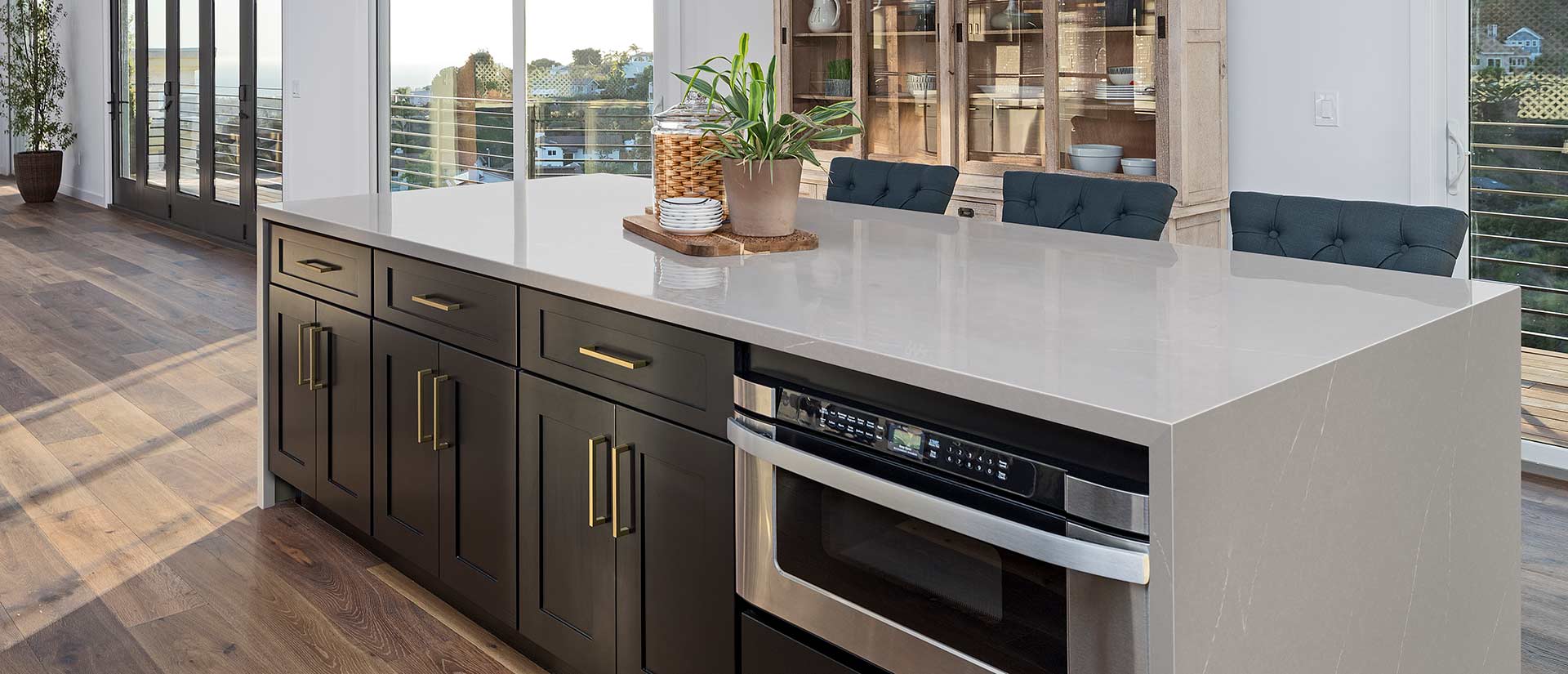
Kitchen surfaces endure heavy daily use, from morning coffee prep to weeknight dinner messes. If you are planning a kitchen renovation or updating your bathroom vanities, surface maintenance ranks high on your priority list. Natural stones like granite and marble carry well-earned reputations for requiring routine chemical sealers to prevent permanent staining. Because engineered stone shares a similar stone look, you might wonder if quartz demands the exact same ongoing upkeep.
The straightforward answer is no. Quartz countertops never need sealing. In fact, applying an off-the-shelf stone sealer to quartz can actually damage the finish. Understanding how manufacturers engineer these slabs, why sealers fail on them, and how to protect your investment ensures your kitchen remains both stunning and functional across decades of busy family living.
The Science Behind Engineered Quartz
Engineered quartz differs fundamentally from quarried slabs cut directly from the earth. Natural stones feature an intricate network of microscopic fissures, capillary pores, and open channels. Liquids like red wine, lemon juice, or cooking oil seep down into these micro-openings, leaving dark spots trapped inside the stone structure.
Quartz slabs, by contrast, are manufactured surfaces. Producers create them using a precise ratio:
- Roughly 90 to 93 percent crushed natural quartz mineral aggregates, which represent one of the hardest minerals on earth.
- Roughly 7 to 10 percent specialized polymer resins, pigments, and binding agents.
- Intense vacuum vibration and hydraulic press compaction that forces out every microscopic pocket of trapped air.
- Controlled heat-curing cycles that solidify the resin into an impervious solid slab.
This advanced manufacturing method seals the entire slab from the inside out during factory production. The resulting surface is completely non-porous. Because liquids cannot penetrate beneath the outer plane, topical liquids sit on top of the material rather than soaking into the core.
Why Applying Sealers Causes Surface Problems
Applying a penetrating stone sealer to quartz countertops does not provide extra protection. Penetrating sealers work by sinking deep into open pores, reacting with natural minerals, and hardening inside microscopic voids.
Because quartz lacks open pores, the liquid sealer has nowhere to go. It simply pools on top of the hardened resin binder. As the carrier solvents evaporate, the leftover chemical sealant forms a cloudy, uneven, streaky film across your counter.
This dried chemical residue leads to frustrating surface flaws:
- A hazy, patchy film that masks the natural depth and luster of the stone pattern.
- Visible swirl marks, fingerprints, and smudge outlines that resist normal wiping.
- Chemical discoloration caused by the bonding solvents reacting negatively with the resin binder.
- Costly professional buffing or chemical stripping required to scrape away the cured residue without scratching the underlying quartz.
If an installer or contractor suggests sealing your engineered quartz, decline the service. The engineered composition already delivers all the built-in moisture defense your kitchen will ever need.
Quartz vs. Granite: The Maintenance Comparison
Homeowners weighing countertop options often compare quartz against traditional granite. While both materials deliver incredible durability, their care routines vary dramatically.
Porosity and Stain Defense
Granite forms naturally under volcanic pressures, leaving variable density across every slab. Lighter granites in particular absorb moisture quickly, which means unsealed granite can soak up dark liquids in minutes. Homeowners must test granite annually with water drops and apply fresh chemical sealants whenever water stops beading. Quartz eliminates that entire chore. Coffee spills, citrus juice, balsamic vinegar, and olive oil wipe away clean without any chemical sealants.
Structural Resilience
Natural stone slabs possess natural fault lines that can crack under focused impacts. The polymer resins inside quartz lend a degree of structural flexibility, giving it higher impact resistance against dropped heavy pans.
Heat Vulnerability
Granite handles hot pots directly off the stove without scorching. Quartz, however, contains plastic polymer resins that can burn, discolor, or crack under sudden thermal shock. Always set hot pans, slow cookers, and electric griddles on trivets or hot pads when working on quartz.
For comprehensive advice on preserving different surface types, review countertop care and maintenance techniques tailored to each material profile.
Everyday Care and Cleaning Best Practices
Keeping quartz clean requires minimal effort, but using the correct products preserves the factory sheen for the life of your home.
Recommended Daily Cleaners
You do not need expensive, stone-specific polishes for your routine cleanup routine. Simple household basics deliver the safest results:
- Warm water paired with a few drops of mild liquid dish soap.
- Soft microfiber cloths, cotton towels, or non-abrasive cellulose sponges.
- A 50/50 mixture of water and rubbing alcohol for quick sanitizing and smudge-free drying.
- pH-neutral spray cleaners formulated specifically for solid surface materials.
Products and Tools to Avoid
The resin binders that keep quartz non-porous remain sensitive to harsh chemicals and abrasive friction. Protect your counters by keeping these items away:
- Bleach, oven cleaners, and drain unclogging solutions.
- Abrasive scouring powders, cream cleansers, and pumice scrubbers.
- Heavy-duty steel wool, scouring wire pads, or rough scrubbing brushes.
- High-pH alkaline cleaners like ammonia or highly acidic concentrated bathroom sprays.
- Nail polish remover containing pure acetone, paint thinners, and industrial solvents.
If sticky residue like dried candle wax, chewing gum, or food syrup hardens on your counter, gently scrape it away using a plastic putty knife held flat against the slab. Once scraped loose, wipe the area with warm soapy water.
Designing a Coordinated Kitchen in West Michigan
A kitchen remodel involves more than picking durable counters. Designing a unified kitchen space means pairing your quartz colors with flooring and wall surfaces that stand up to regional demands.
Across West Michigan, homes face harsh sub-freezing winters, lake-effect snowstorms, and muddy spring thaws. Tracked-in slush and rock salt demand robust flooring underneath your work areas. Pairing durable quartz islands with waterproof luxury vinyl or durable tile creates an enduring workspace suited to busy suburban households in Ada or active lakefront properties near Hudsonville.
To pull the overall room aesthetic together, pair your slab with complementary vertical surfaces. Installing a custom tile backsplash protects your drywall from cooking splatters while accenting the subtle veining inside your quartz counters.
Plan Your Remodel with Expert Guidance
Selecting the ideal counter profile, edge detail, and color palette becomes much easier when you see real materials under natural lighting. Visiting a local showroom gives you direct access to physical slabs, coordinating tile patterns, and hardwood samples to build a cohesive interior palette.
At DeGraaf Interiors, our team helps you choose surfaces that balance daily practicality with refined styling across your Grand Rapids, MI home. Stop by our showroom locations in Grand Rapids on Fulton Street or Hudsonville on 28th Avenue to examine slab samples in person.
Ready to begin planning your kitchen upgrade? Schedule an in-person design consultation with our specialists today, and let us help you build a durable, low-maintenance kitchen tailored to your family.